Choosing clear aligners can feel like a big decision, especially when you’re weighing brands like Spark and Angel Aligners. Both offer discreet, effective ways to straighten your smile, but they’re not identical. Understanding the real differences helps you pick the option that fits your smile goals and lifestyle.
Here’s what you need to know before your free consult.
What Are Clear Aligners? Spark and Angel Aligners Explained
Clear aligners are removable, transparent trays that gradually shift your teeth into a straighter position. You wear a series of custom trays, each slightly different from the last, and your teeth move in small, controlled steps over the course of treatment.
Spark Aligners, made by Ormco in the United States, use a material called TruGEN. It’s known for exceptional clarity, stain resistance, and a smooth, comfortable trim. Spark is often chosen by orthodontists who want precise, clinician-driven control over every step of the plan.
Angel Aligners use a proprietary A-360 stretch material and offer a unique Pro 7+3 dual-material protocol. This approach alternates flexible and firm trays to help handle more complex tooth movements while keeping treatment comfortable.
Both systems can address:
- Mild-to-moderate crowding
- Spacing and gaps
- Minor bite concerns
At Johnson Orthodontics, Dr. Jacob Johnson offers a free consult to review your smile, discuss your goals, and help you decide which system is the right fit for your needs.
How Spark and Angel Aligners Work
Both Spark and Angel Aligners follow a similar three-step process, though the technology and materials behind them differ. Here’s what you can expect at Johnson Orthodontics.
What Happens During the Digital Scan and Planning?
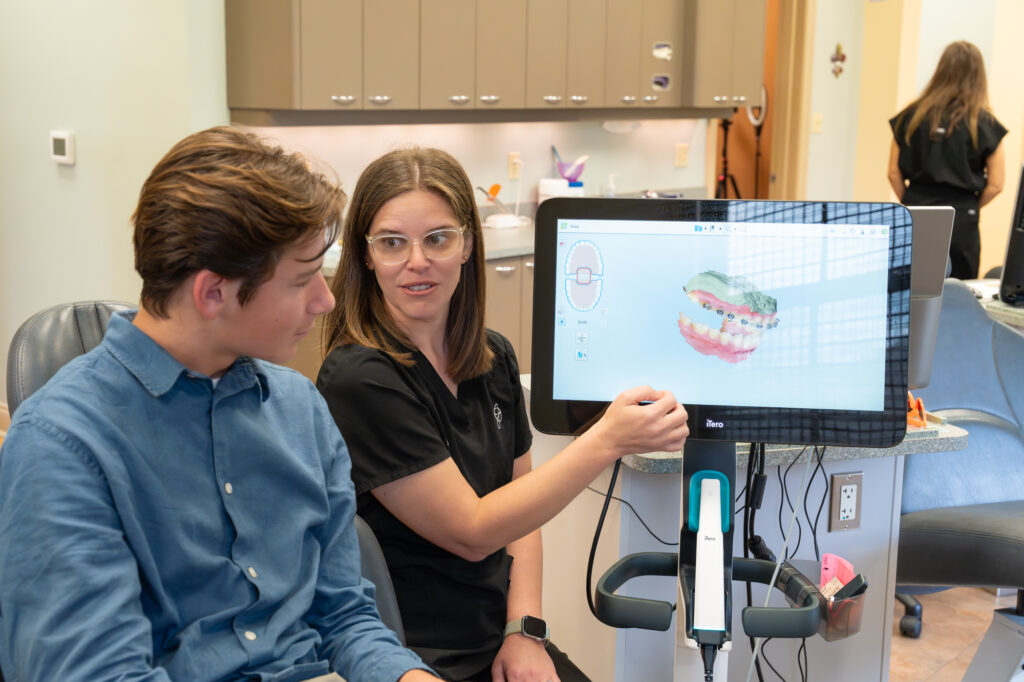
Your visit begins with a digital 3D scan of your teeth. No goopy impressions. This scan lets Dr. Johnson map out precise tooth movements and preview your expected results before treatment starts. Digital photos and X-rays round out your records so nothing is missed.
How Are Your Custom Trays Made?
Once your plan is approved, your custom trays are manufactured. You’ll receive a full series designed specifically for your teeth. Most families wear their aligners 20 to 22 hours per day, removing them only to eat, drink anything other than water, and clean their teeth.
How Often Do You Switch Trays?
You’ll swap to a new tray every 1 to 2 weeks, depending on Dr. Johnson’s plan for your case. Each new tray moves your teeth a small, calculated amount, keeping your progress on schedule.
What Tools Support Precise Movement?
Both systems may involve:
- Attachments: Small, tooth-colored bumps bonded to certain teeth to help trays grip and guide specific movements
- IPR (Interproximal Reduction): Gentle smoothing between teeth to create space when needed
Angel’s Pro 7+3 protocol rotates between seven flexible trays and three firmer trays in each cycle, giving the orthodontist extra control for cases that need it. Spark’s TruGEN material is engineered for clarity and consistent force delivery throughout each stage.
Dr. Johnson will walk you through which approach best matches your smile goals and daily routine.
Benefits of Choosing Clear Aligners Over Braces
Clear aligners have earned their popularity for good reason. They offer flexibility and comfort that traditional braces can’t match, though they do require commitment. Here’s a look at the real advantages, along with the trade-off you should know about.
Are Clear Aligners Really Nearly Invisible?
Both Spark and Angel Aligners are designed to blend in. Most people won’t notice you’re wearing them, which makes them a favorite for:
- Adults in professional settings
- Teens who feel self-conscious about braces
- Anyone with weddings, photos, or big events on the calendar
Can You Remove Aligners for Meals and Cleaning?
Because you take your aligners out to eat, there are no food restrictions. Popcorn, corn on the cob, sticky candy, and crunchy snacks are all still on the menu. Brushing and flossing stay simple too, since you’re cleaning your teeth without working around brackets and wires.
Do Aligners Mean Fewer Emergency Visits?
With traditional braces, broken brackets and poking wires can mean unexpected trips to the practice. Clear aligners eliminate most of those emergencies. If a tray cracks or gets lost, the fix is usually straightforward and quick.
Are Clear Aligners More Comfortable Than Braces?
Aligner trays have smooth, rounded edges. No metal rubbing against your cheeks or lips. Most patients report mild pressure for a day or two when starting a new tray, then things settle down.
How Does Oral Hygiene Compare?
Removing your trays to brush and floss means better gum health and less risk of white spots or decay during treatment.
Do You Need Fewer Chair-Side Visits?
Because tray changes happen at home, you may need fewer in-practice check-ins compared to braces. Some cases even support remote monitoring between visits, adding more convenience for busy families.
Why Does Compliance Matter So Much?
Clear aligners only work if you wear them. That means 20 to 22 hours per day, every day. If you take them out too often or forget to put them back in after meals, your treatment can slow down or stall. Braces work whether you’re motivated or not. Aligners need your commitment.
For most families, this trade-off is well worth the flexibility that clear aligners provide.
Spark vs. Angel Aligners: Side-by-Side Comparison
Both systems can deliver beautiful results in the right hands. The differences come down to material, manufacturer, and how each system handles specific cases. Here’s how they stack up.
| Feature | Spark Aligners | Angel Aligners |
|---|---|---|
| Material | TruGEN (stain-resistant, ultra-clear) | A-360 stretch polymer |
| Manufacturer | Ormco (U.S.-based) | Angel Aligner (global, growing U.S. presence) |
| Case Range | Mild-to-moderate; strong clinician control | Mild-to-moderate; Pro 7+3 for more complex movements |
| Tray Clarity | Widely praised for clarity and smooth trim | Stain-resistant with comfortable fit |
| Tray Changes | Typically every 1–2 weeks | Typically every 1–2 weeks |
Which System Is Right for You?
Choose Spark if you want a U.S.-manufactured system with exceptional tray clarity and a proven track record for clinician-driven planning. Many patients appreciate how discreet Spark trays look, even in close-up photos.
Choose Angel if your case may benefit from the Pro 7+3 dual-material protocol. Angel’s flexibility can be a smart choice for certain tooth movements.
Dr. Jacob Johnson will review your scans and recommend the system that best matches your case. There’s no one-size-fits-all answer, and that’s exactly why a free consult matters.
Paying for Clear Aligner Treatment
Clear aligner cost depends on a few key factors: how complex your case is, how long treatment takes, and how many trays you’ll need.
What Affects Your Treatment Timeline?
- Case complexity: Simple spacing corrections typically involve fewer trays than full-arch bite work
- Treatment length: Shorter plans mean a shorter tray series
- Number of trays: More movement means more trays
- Refinements: Some cases need additional trays near the end to fine-tune results
How Insurance and Financing Can Help
Many insurance plans include orthodontic benefits that can cover a portion of clear aligner treatment. FSA and HSA funds can also be used toward treatment, giving you more flexibility in how you pay.
At Johnson Orthodontics, we offer:
- In-house payment plans
- Pay-in-full savings
- Flexible payment options designed to fit your family’s needs
Your free consult with Dr. Johnson includes an honest conversation about your options and how to make treatment work for your household, with no pressure at any step.
Are You a Good Candidate for Spark or Angel Aligners?
Clear aligners work beautifully for many patients, but they’re not right for every case. Here’s how Dr. Jacob Johnson evaluates candidacy at Johnson Orthodontics.
Who Is a Great Candidate for Clear Aligners?
- You have mild-to-moderate crowding, spacing, or minor bite concerns
- Your teeth and gums are healthy with no active decay
- You’re ready to commit to 20–22 hours of daily wear
- You value discretion and flexibility during treatment
- You’re a teen or adult motivated to follow the plan
When Might Clear Aligners Not Be the Best Fit?
- You have severe rotations or significantly tilted teeth
- Your case involves major skeletal bite issues
- You have complex bite problems that need appliances like the Herbst
- You’re not ready to wear trays consistently every day
For cases that need more than aligners can offer, Dr. Johnson may recommend metal braces, clear braces, or a Herbst appliance. Dr. Johnson evaluates every case individually. You’ll never be pushed into a treatment that isn’t right for your smile.
The best way to know for sure is a free consult. Dr. Johnson will review your scans, discuss your goals, and give you an honest recommendation that fits your needs.

Frequently Asked Questions
Which is better, Spark or Angel Aligners?
Neither system is universally “better.” The right choice depends on your case and your orthodontist’s recommendation. Spark is often praised for its ultra-clear TruGEN material and premium finish, while Angel Aligners offer a flexible Pro 7+3 protocol for more complex movements. Dr. Jacob Johnson will review your scans and recommend the system that best fits your smile.
How long does clear aligner treatment take?
Most clear aligner cases take between 6 and 18 months, depending on complexity. Simple spacing or minor crowding may finish faster, while more involved cases take longer. Compliance matters too. Wearing your trays 20–22 hours per day keeps your treatment on schedule and helps you finish on time.
Is Spark as good as Invisalign?
Yes, for comparable cases with proper planning. Spark uses a different material (TruGEN) that many orthodontists prefer for its clarity and stain resistance. Both systems can deliver excellent results when planned and monitored by an experienced orthodontist like Dr. Johnson.
How much do clear aligners typically cost?
Cost varies based on case complexity, treatment length, and the system chosen. Every case is different, so the clearest way to understand your options is a personalized consultation. We also offer in-house payment plans to help make treatment more manageable for every family.
Does insurance cover clear aligners?
Many orthodontic insurance plans cover a portion of clear aligner treatment, similar to how they cover traditional braces. FSA and HSA funds can also be applied. Our team will help you understand your benefits during your consult and walk you through every step.
Can I eat and drink with aligners in?
Remove your aligners for anything except plain water. Eating with trays in can crack them, and sugary or acidic drinks can trap liquid against your teeth and cause decay. Always brush before putting your trays back in after meals for the healthiest smile possible.
What happens if I lose an aligner tray?
Contact Johnson Orthodontics right away if you lose or damage a tray. In many cases, Dr. Johnson may recommend moving to your next tray early or wearing your previous tray while a replacement is made. Acting quickly keeps your treatment on track and prevents any backward tooth movement.